The Science of Spotting Hidden Product Ideas
The best product ideas hide in plain sight, in your habits and everyone else's. Watch what people actually do, not what they say they want. Build for that.
3 min readStartup Building & Entrepreneurship💌 Tiny Improvements

The Big Idea
The best product ideas hide in plain sight, in your habits and everyone else's. Watch what people actually do, not what they say they want. Build for that.
Most teams start their search for ideas with a brainstorm. The trouble is that people are unreliable narrators of their own needs. We guess. We speculate. We tell ourselves a story about what might help, instead of looking at how we actually behave.
Lucky for you, a little applied science can give you a clearer way to see.
Below are three ideas rooted in behavioral psychology which can help you find opportunities through observation of your own habits and those of others.
Revealed preference
Revealed preference is the idea that actions speak more clearly than opinions.
In the software world, these actions are everywhere. When developers repeat the same chores by hand, maintain a giant list of test data in a scratch file, or juggle three tools to get one thing done, they are revealing what they actually need.
Bruno is a clean example. It's an API tool that has gained favor as Postman added account login requirements that their users weren't asking for, while the real preference was simple: keep everything local, work fast, commit changes, share them with a team.

Bruno didn't invent a new workflow. It paid attention to the one people were already trying to use.
Habit loops
When behaviorists talk about the Habit Loop, they describe it as cue, routine, reward. If the routine becomes messy, people still follow it, because the reward matters.
But the mess reveals an opportunity.
Testing an API is a perfect illustration. The cue is obvious. The reward is seeing the result. What changed over time was the routine. Postman added friction. Bruno's approach added value. All Bruno did was design a routine that matched the way developers already think.
When you look closely at routines that people repeat every day, the problems usually introduce themselves.
Jobs to Be Done
Jobs to Be Done reframes product building around one question: what job is someone trying to get done, and how well are their tools helping them do it?
People "hire" their tools and workflows when they get things done. Sometimes it means a stack of half solutions held together with muscle memory. When you see the duct tape, you are seeing the job that isn't being served very well.
In Bruno's case, the job was straightforward. Teams wanted an easy, dependable way to explore and share their API workflows with their teams. The job didn't change. The tools did.
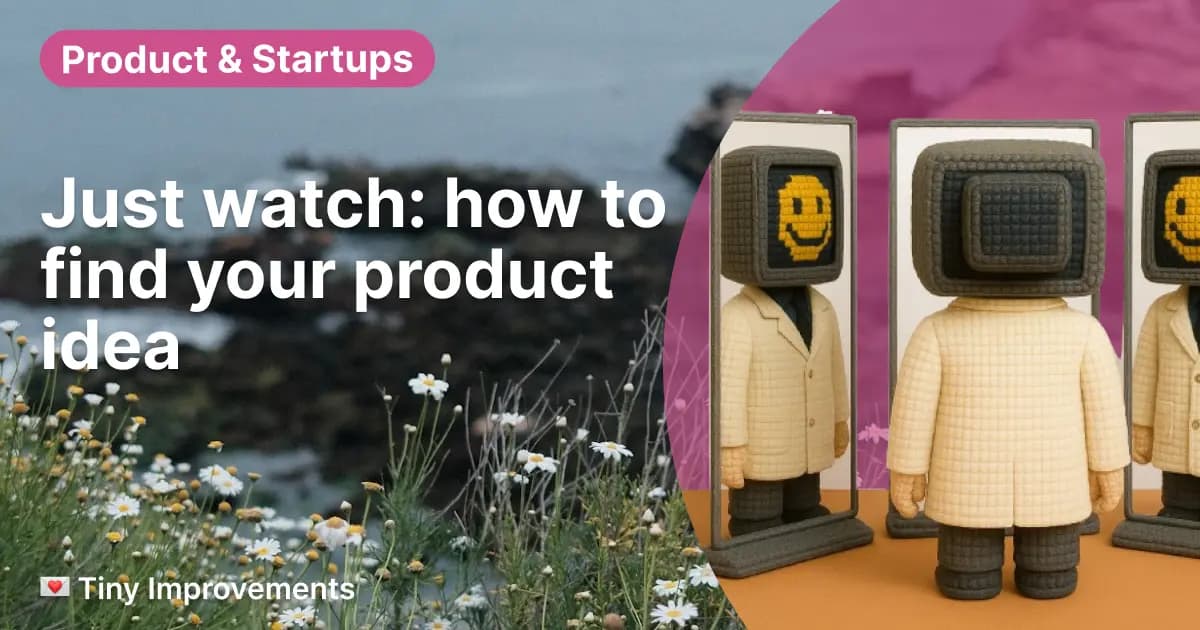
Gaze into your own mirror
This process of finding opportunities works best when you turn the lens on yourself.
Ever tried to describe your workflow to someone who has never done it before? I bet you'll find something that sounds at least a little absurd that you've been doing for ages.
Look at the workflows you repeat without thinking. Look at where you slow down, or compensate, or adapt to a tool that isn't quite right. These moments are often small, but they are rarely isolated. If something bothers you, it probably bothers someone else. Enough shared friction becomes a market.
Most people think they need inspiration. What they really need is observation.
The takeaway
You don't have to invent a brand new idea. You just have to watch behavior more closely than everyone else.
Revealed preferences show you what people truly value.
Habit loops show you where routines break down.
Jobs to Be Done shows you why the work matters in the first place.
Everything else is just paying attention.
Keep on learning, my dudes
- Everyone's favorite self-help author James Clear has a great article on the Habit loop that's worth a read.
- Jobs to be done is the OG tome by Clayton Christensen that broke ground on the idea of breaking down customer needs into specific "jobs" that your product can satisfy.